
 805-962-1930
After a collision with a commercial truck, critical evidence begins disappearing almost immediately. Truck accident evidence preservation matters because the electronic systems that record what happened before and during a crash operate on limited storage cycles, which is why contacting a Santa Barbara truck accident attorney early is essential. Without prompt action, the data needed to understand the accident may be overwritten or purged under normal business retention policies.
Commercial trucks generate extensive electronic records that help reconstruct collisions and identify contributing factors. Electronic logging devices, event data recorders, and onboard cameras capture information that may be essential to your claim. Understanding what evidence exists and how quickly it may disappear helps explain why early legal involvement matters in Santa Barbara truck accidents.
Key Takeaways for Truck Accident Evidence Preservation
- Electronic logging devices and event data recorders capture speed, braking, hours of service, and other critical information that may be overwritten within days or weeks.
- The Federal Motor Carrier Safety Administration requires carriers to retain ELD records for only six months, and some data cycles much faster.
- Trucking companies may repair vehicles, reassign drivers, or purge records under normal retention policies unless formally notified to preserve evidence.
- Attorneys may issue preservation letters, also called spoliation letters, to require that trucking companies retain relevant records and electronic data.
- Acting quickly after a Highway 101 truck crash helps ensure that time-sensitive evidence remains available for investigation.
What Electronic Systems Record in Commercial Trucks
Modern commercial trucks contain multiple electronic systems that capture data about vehicle operation. Understanding what these systems record helps explain their value in accident investigation.
Event Data Recorders: The Truck’s Black Box
Event data recorders, often called black boxes, function similarly to aircraft flight recorders. These devices continuously capture information about vehicle operation and retain data from the moments leading up to and surrounding a collision, making it important to choose the right personal injury lawyer to secure and analyze this evidence properly.
Information typically recorded by event data recorders includes:
- Vehicle speed in the seconds before impact
- Brake application timing and force
- Accelerator pedal position
- Steering input
- Seatbelt status
- Engine RPM and throttle percentage
This data helps reconstruct exactly what the truck was doing before the crash, which may reveal whether the driver braked in time, was traveling at an appropriate speed, or took evasive action.
Electronic Logging Devices: Hours of Service Records
Electronic logging devices automatically track driver hours to ensure compliance with federal hours-of-service regulations. The FMCSA requires most commercial drivers to use ELDs rather than paper logs.
ELD data may reveal whether a driver exceeded legal driving limits, took required rest breaks, or was operating while fatigued. Driver fatigue contributes to many serious truck accidents, and ELD records provide objective documentation of how long a driver had been on the road.
Onboard Cameras and Telematics
Many trucking companies equip vehicles with forward-facing cameras, cabin cameras, and telematics systems that track location, speed, and driving behavior. This footage and data may show what happened in the moments before a collision, including whether the driver was distracted, whether road conditions contributed to the crash, or whether other vehicles were involved.
How Quickly Evidence May Disappear
Truck accident evidence preservation requires urgency because electronic systems have limited storage capacity. Data recorded today may be overwritten within a few days under normal operating conditions.
Rolling Data Cycles
Event data recorders typically store information in loops, meaning older data is overwritten as new data is recorded. Some systems retain only the most recent driving events, while others may preserve data for longer periods. Without intervention, the specific data from your accident may be replaced within days.
Retention Policy Limitations
Federal regulations require motor carriers to retain ELD records for six months. However, other electronic data, such as telematics information or camera footage, may be subject to shorter company retention policies, which can affect evidence availability in a personal injury lawsuit. Trucking companies may purge this data as part of normal business operations unless they receive formal notice to preserve it.
Vehicle Repairs and Reassignment
Trucking companies have financial incentives to return damaged vehicles to service quickly. Repairs may alter or destroy physical evidence, and vehicles may be reassigned or sold. Once a truck returns to operation, the opportunity to inspect it in its post-accident condition may be lost.
What a Preservation Letter Accomplishes
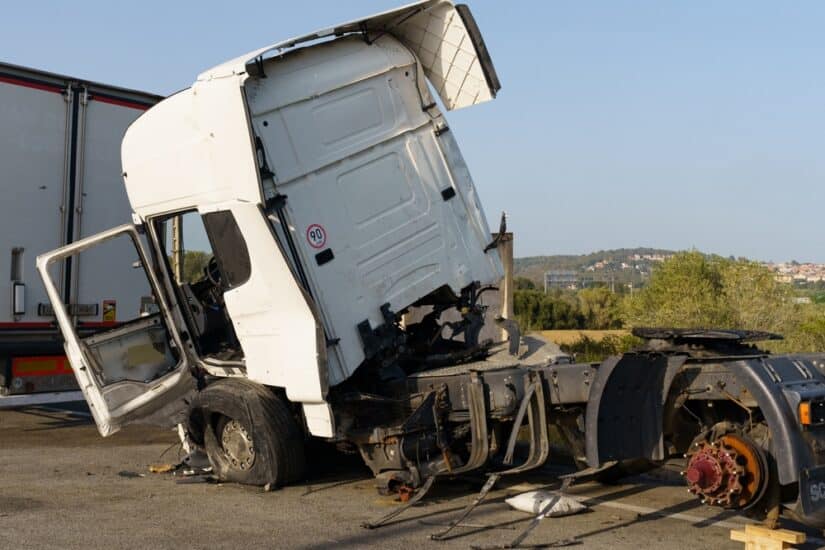
Attorneys handling truck accident cases may issue preservation letters, sometimes called spoliation letters, to trucking companies and other parties. These formal requests notify recipients of their legal obligation to retain evidence that may be relevant to litigation.
A preservation letter typically requests retention of:
- Event data recorder and black box information
- Electronic logging device records
- Driver qualification files and training records
- Vehicle maintenance logs and inspection reports
- Onboard camera footage
- Dispatch communications and trip records
- Drug and alcohol testing records
Sending this letter early in the process helps ensure that normal data retention cycles and business practices do not result in evidence loss. If a company destroys evidence after receiving a preservation letter, courts may impose sanctions or draw negative inferences against that party.
Highway 101 Truck Traffic in Santa Barbara
Santa Barbara’s position along Highway 101 means significant commercial truck traffic passes through the region daily, which can increase the risk of serious collisions and the need to file a personal injury claim. The corridor between Carpinteria and Gaviota sees a constant mix of long-haul freight, regional delivery vehicles, and local commercial trucks serving downtown businesses.
Congestion near Hot Springs Road, Castillo Street, and the downtown exits creates conditions where trucks interact closely with commuters, tourists, and cyclists. Accidents in these areas may involve multiple vehicles and complex liability questions that a thorough investigation helps resolve.
FAQ for Truck Accident Evidence Preservation
What happens if evidence is destroyed after an accident?
If a trucking company destroys evidence after receiving a preservation letter or after litigation has begun, courts may impose sanctions. These penalties may include adverse inference instructions that allow juries to assume the destroyed evidence was unfavorable to the company.
Do I need an attorney to send a preservation letter?
Preservation letters carry more weight when sent by legal counsel and should be crafted to identify all relevant evidence categories. Attorneys experienced in truck accident litigation understand what data to request and how to ensure compliance.
What if the truck has already been repaired?
Preservation letters carry more weight when sent by legal counsel and should be crafted to identify all relevant evidence categories, which can directly impact a personal injury settlement. Attorneys experienced in truck accident litigation understand what data to request and how to ensure compliance.
How soon after an accident should I contact an attorney?
The sooner the better. Evidence preservation requests are most effective when sent within days of an accident, before data cycles overwrite critical information or normal business practices result in record purging.
Protecting Your Claim Through Early Action

Time-sensitive evidence requires prompt attention after a Highway 101 truck crash. At Maho | Prentice, LLP, our attorneys understand the investigative demands of commercial vehicle accidents and know how to preserve critical evidence before it disappears. With over 50 years of combined experience and 85 jury trials, we bring the preparation that complex truck cases require.
Our downtown Santa Barbara office at 629 State Street offers free consultations 24 hours a day in English and Spanish. We work on contingency, meaning you pay nothing unless we recover compensation on your behalf. Call 805-962-1930 to discuss your truck accident and learn how early action helps protect your claim.